
Con il tempo si cambia fisicamente, ma, soprattutto, si cambiano i gusti. Se negli anni Ottanta era inferiore al dieci percento il numero delle mostre visitate di artisti contemporanei, lo stesso valeva per la fotografia e mi approcciavo con scietticismo se non era Alinari.
Pur continuando a ripetere come una litania che il “mostrismo” italiano propina troppe esposizioni inutili, sapendo scegliere, sono tante le cose da visitare e far vedere ai ragazzi.
Un plauso alla Fondazione MAST di Bologna – istituzione internazionale, culturale e filantropica, basata sulla Tecnologia, l’Arte e l’Innovazione di cui Marica vi ha riferito dopo l’inaugurazione dell’ottobre scorso – il cui archivio è una preziosa memoria storica di impatto immediato ed eventualmente da approfondire a casa come la mostra “Capitale Umano nell’Industria” inaugurata nei giorni scorsi e visitabile gratuitamente fino al 30 agosto prossimo (e per settembre è già in programma un tema altrettanto importante).
Dalla Collezione di Fotografia su Industria e Lavoro della Fondazione MAST, 254 fotografie tra opere su commissione, documentarie e scatti d’artista il cui insieme delinea la complessità che, da sempre, struttura i rapporti fra industria e operai, industria e impiegati in un viaggio attraverso la storia del lavoro.
Il curatore, Urs Stahel, ha selezionato scatti di fotografi famosi (Margarete Bourke-White, Robert Doisneau, David Goldblatt, Brian Griffin, Jacqueline Hassink, Erich Lessing, Jercy Lewczyński, Ugo Mulas, Jorge Ribalta, August Sander, Josef Sudek, Larry Sultan/Mike Mandel, Jakob Tuggener), ma anche di anonimi e di collaboratori delle fabbriche.
Il lavoro dell’uomo nelle miniere, nelle grandi industrie metallurgiche, meccaniche, nelle fabbriche tessili. E ancora, i cantieri stradali, ferroviari e navali e nelle centrali elettriche. Il confronto di strumentazioni, metodi e condizioni dall’Ottocento ad oggi, dai Colletti Blu e Bianchi, ai direttori e imprenditori.
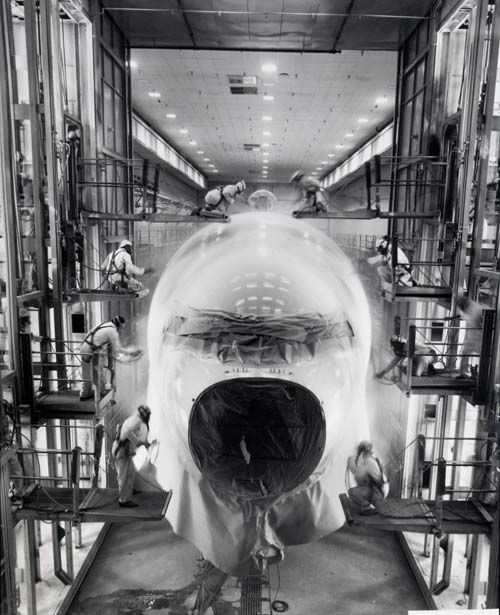
L’obiettivo coglie il pendolarismo come il tempo del lavoro rigorosamente disciplinato dall’industria in un attento ritratto dell’’Occidente basato su realtà lavorative in netta contrapposizione alle rappresentazioni dell’’Unione Sovietica in quegli stessi anni.
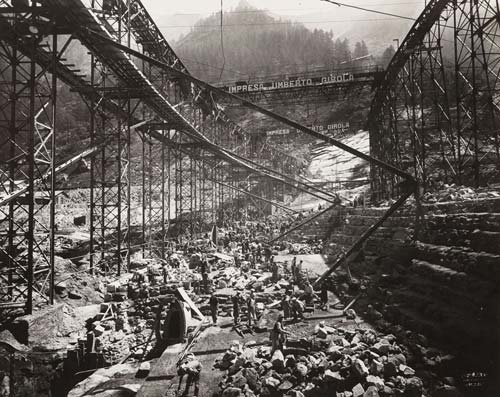
Il Curatore, nel catalogo che accompagna la mostra, spiega “A partire dalla metà del XVIII secolo, l’avvento dell’industrializzazione in Europa e nel resto del mondo ha prodotto un mutamento così determinante nelle condizioni di vita delle persone da indurci a coniare il termine ‘rivoluzione industriale’. Nel corso dei successivi 250 anni, le tradizionali forme del lavoro agricolo e artigianale sono state progressivamente soppiantante da procedimenti produttivi di carattere industriale.
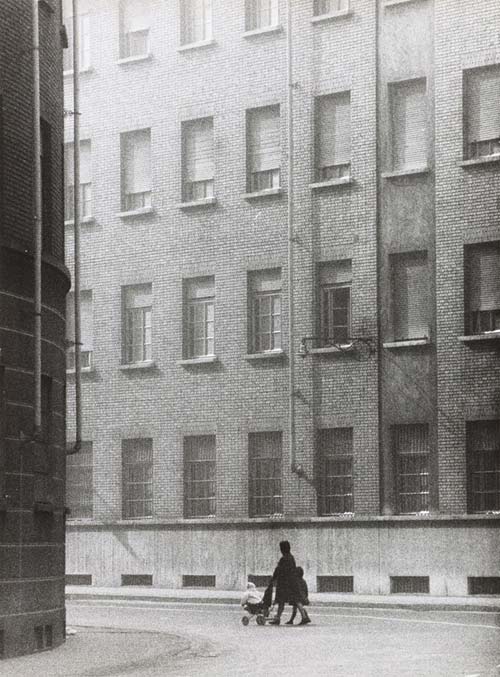
Nel frattempo, il processo di industrializzazione che aveva interessato il settore primario e secondario, il reperimento delle materie prime e la loro lavorazione, si è esteso anche al terziario, all’organizzazione del tempo libero, alla cultura e alla gestione dei rifiuti.
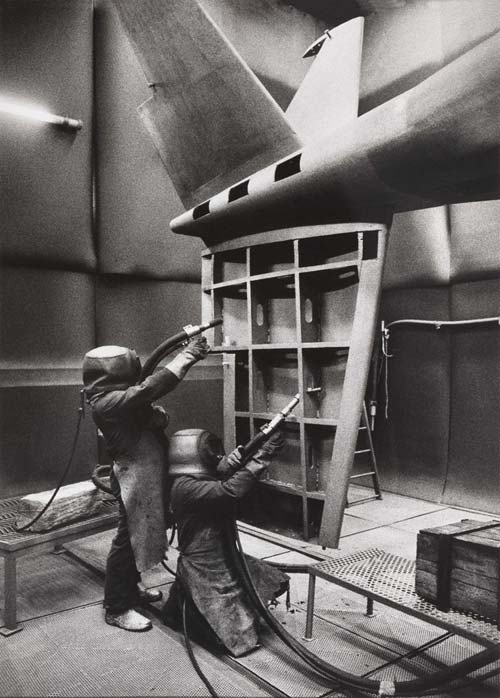
Sarebbe riduttivo affermare che l’industrializzazione ha rivoluzionato soltanto le politiche economiche. Essa ha piuttosto condizionato l’intera società, le nostre conoscenze, il nostro pensiero, il commercio, in altre parole la nostra esistenza nella sua totalità. Prima dell’avvento dell’industrializzazione, la vita e il lavoro seguivano il ciclo naturale e biologico: l’avvicendarsi delle stagioni, il sorgere e il tramontare del sole scandivano il ritmo della giornata e il corso dell’anno.
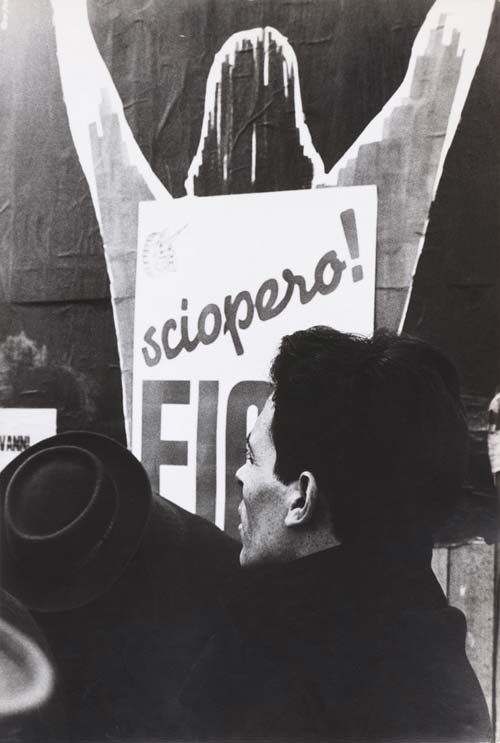
Da un certo punto in poi, le esigenze della produzione hanno preso il sopravvento, hanno scandito il ritmo della giornata lavorativa, hanno stabilito a che ora il lavoratore dovesse puntare la sveglia per recarsi al lavoro. Ecco perché parliamo di “tempo della fabbrica”: nel mondo dell’industria, per la prima volta, le ore di lavoro e le ore di tempo libero sono state quantificate e regolamentate dal suono delle sirene, dai controlli all’entrata e, in ultimo, dalla timbratura del cartellino.
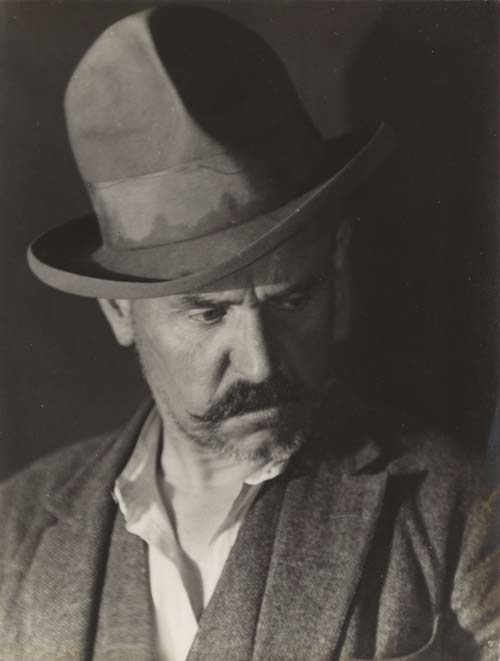
Mutando il modo di lavorare, è mutato di conseguenza il rapporto tra città e campagna. Tradizionalmente vita e lavoro erano parti integranti di una stessa unità: si abitava e lavorava nello stesso luogo o, perlomeno, nelle immediate vicinanze. L’industrializzazione e le offerte di lavoro ad essa collegate hanno spinto le persone ad allontanarsi sempre più dal luogo d’origine, fino a spingerle ad emigrare. Gli equilibri di potere si sono spostati dalla campagna alla città.“
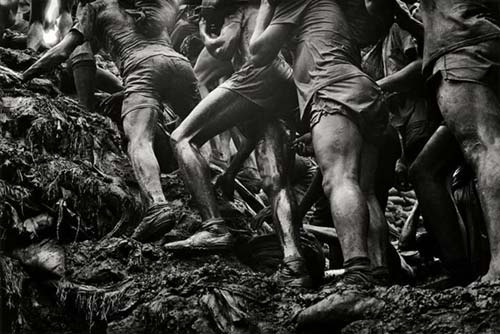
Gli spazi del MAST, a quattro chilometri dalla stazione centrale, permettono una visita dettagliata con passibilità di una piacevole pausa alla cafetteria (cercate gli spiedini di tortellini!) per poi rituffarsi in quell’universo di immagini fra cui, alcune, sorprenderanno anche chi ha visto quasi tutto inducendo alla riflessione in un circulo virtuoso dove appare evidente come l’industria abbia portato a effetti a cascata. Per esempio l’igiene: all’aumentare delle condizioni di pulizia, diminuivano le malattie.
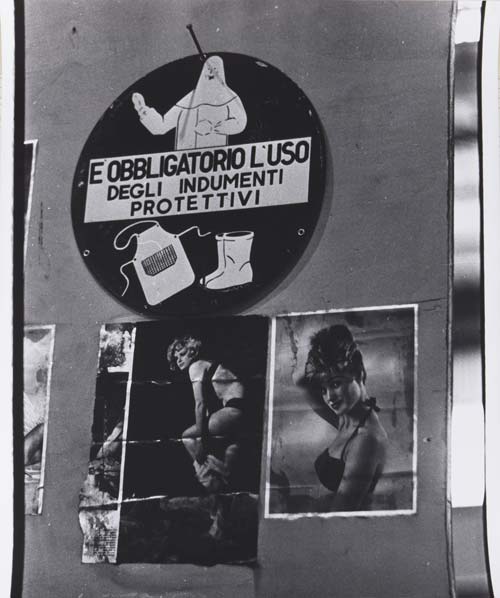
Fra le didascalie si legge: “Un ispettore aziendale descrive ciò che è comune trovare nelle fabbriche, ancora all’inizio del XX secolo: “Lampade a petrolio fumose e maleodoranti, un’aria così pesante che la si può tagliare col coltello; non ci sono finestre apribili, nessun ventilatore; acqua potabile e possibilità di lavarsi del tutto eccezionali, scarico della latrina ignoto, orinatoi molto rari, dispositivi di protezione che oggi appaiono ovvi del tutto sconosciuti”. All’inizio del XX secolo le industrie iniziano a predisporre strutture destinate al bagno, dotate di docce o vasche. Si comincia a riconoscere il valore economico di fattori come l’igiene e la sicurezza. Da quel momento gli operai si ammalano di meno e diminuiscono gli incidenti sul lavoro. ”
Didascalie immagini
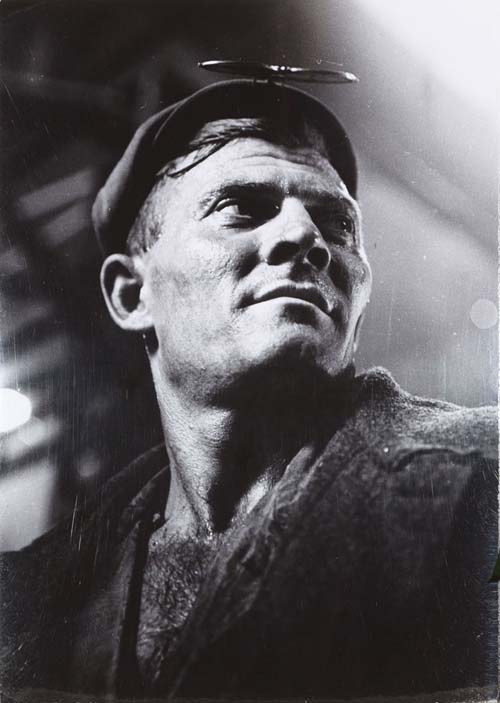
- Max Alpert, Worker, 1930
© Max Alpert, Courtesy of Nailya Alexander Gallery, New York - Kurt Blum, Protettivi, 1961
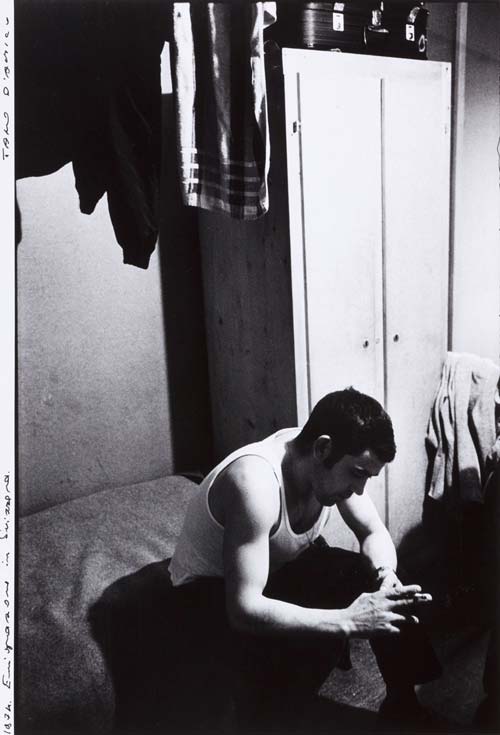
© Kurt Blum, Courtesy Fotostiftung Schweiz, Winterthur - Tano D’Amico, Emigrante italiano, Zurigo, 1972
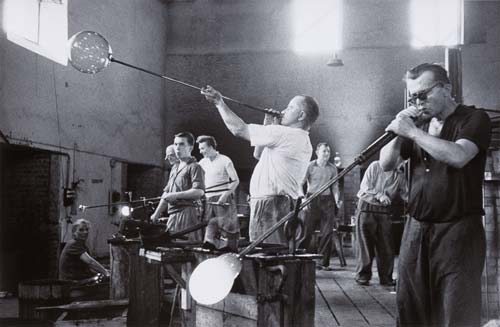
© Tano D’Amico, Courtesy S.T. foto libreria galleria, Roma - Erich Lessing, Moser glass factory, Karlovy Vary, Czech Republic, 1956
© Erich Lessing / lessingimages.com - Mike Mandel & Larry Sultan Untitled From “Evidence”, 1977
© The Estate of Larry Sultan & Mike Mandel, Courtesy Galerie Thomas Zander, Cologne - Antonio Paoletti Impresa Umberto Girola, Diga di Agaro, 1935-1941
© Antonio Paoletti, courtesy Michael Jakob - Stefano Robino, Veduta urbana, 1969
© Stefano Robino, Courtesy Admira, Milano - Sebastião Salgado, Brest, France, 1990
© Sebastião Salgado/Amazonas Images/Contrasto - Giancarlo Scalfat,i Milano, 1969
© Giancarlo Scalfati - Josef Sudek, Steel Worker, 1923
© Josef Sudek, Courtesy Galerie Johannes Faber, Vienna - Sebastião Salgado, „Brasil“, Gold Mines, Serra Pelada, 1986
© Sebastião Salgado/Amazonas Images/Contrasto
In copertina:
Un particolare di: Erich Lessing Moser glass factory, Karlovy Vary, Czech Republic, 1956
© Erich Lessing / lessingimages.com
IN MOSTRA ACCOMPAGNATI
DAL CURATORE URS STAHEL
(courtesy Fondazione MAST Bologna)
Industrialisation has fundamentally changed the way we live: it is a transformation that began in Europe in the mid-eighteenth century and spread across the world. These changes were so significant that the term “Industrial Revolution” was coined to describe them. Gradually, over the course of 250 years, industrial modes of production came to complement and replaced agrarian and artisan forms of labour. Today, industrialisation dominates not only the primary and secondary sectors (the exploitation of natural resources and production) but is also a prevalent force in the service, leisure and culture industries as well as in the waste-management industry.
However, to say that the revolutionary influence of industrialisation is limited to the economy ignores the bigger picture. It transformed society as a whole, our knowledge, the way we think, the way we operate – our entire way of life. Before industrialisation, humans lived and worked in accordance with natural processes and life cycles. The rhythm of their days and years was determined by the changing seasons, the rising and setting of the sun. In the industrialised world, production forces dictated, when it was time to get up and go to work, introducing the notion of “factory time”. For the first time in human history, industrial production quantified and regulated working hours and leisure hours – through factory whistles, entry controls and time cards.
Industrialisation has also changed the distance between home and work, and thus the relationship between urban and rural areas. Historically, living and working formed a unit because they happened in the same place, or at least within the same area. Industrialisation and the changes it brought to the labour market forced workers to travel further and further, or even migrate, in order to seek employment. The balance of power shifted from rural to urban areas.
On the other hand, industrialisation liberated many people by lifting the yoke of serfdom that farmers laboured under and relaxing the strict and rigid regulations artisan guilds imposed on their members. Concepts such as hygiene and progress might not have entered our vocabulary if not for industrialisation. But all these progressive developments came for some at a heavy price: the wealth of a few was built on the impoverishment of another part of the population.
In short, industrial production has brought enormous changes in our existence. On the other hand, industrial production would not have been possible without the human element, without workers. At least until a very short time ago, until the most recent push of automation, man and machine, industry and human labour formed a significantly tight-knitted unit. Even today, the HR manager remains an important authority in any company.
United by this bond, large industries such as engineering industries came to function as communities in themselves, bringing together 200, 250 or even 300 different trades and professions with armies of apprentices. Canteens or staff restaurants fed and continue to feed the multitudes. In the early 1900’s, the institution of the Wohlfahrtshaus (wellfare house) began to offer showers and baths as well as entertainment and education. Bayer Leverkusen is just one of many football clubs to be named after a company.
There have always been two types of industry: on the one hand there are those that treat their staff, workers and employees (or human resources, as they are often called today) with a lot of care and respect, and who are willing to go to great lengths to ensure their health and safety; on the other hand there are those that have little regard for the people they hire, the methods they use to do so, or the timescales and conditions of their employment. Accordingly, the relationship between employers and employees has always been marked by negotiations, demands, disputes and strikes in the fight for humane working conditions, improved safety regulations, higher wages and shorter working hours. Industrial history is also the history of industrial action and organised labour.
The Human Capital in Industries exhibition showcases roughly 230 photographs (commissioned work, socially conscious representations and artistic statements, anonmyous photographs and famous photographers like August Sander, Bourke-White, Davod Goldblatt and many more) from the Fondazione MAST collection in an attempt to address the various issues relating to the past and present of industries and labour, industrialists and employees, human resources and human capital.
Let me enter shortly the exhibition with you:
Miners are the first link in the chain: they bring up coal, ores and now “noble earth elements” from under the ground, sometimes going down hundreds of meters, sometimes prospecting at the surface in open-pit mining operations with powerful machines digging up the ground. For Energy and metals to fuel industrial production all across the world.
And then follow the casters, the founders : the Industrial photographers enjoy the casting process as much as landscape photographers cherish sunsets. The molten material glows intensively as it pours into the casting ladle for “tapping” and then into the casting moulds. The colourful spectacle only lasts a few minutes – the rest is dirty work for the foundry fettlers.
Cast pieces have to be processed. Surfaces are ground, welding seams are removed, slots and holes are added to provide fixings for assembly. That is the realm of heavy industries. The heavy forging hammers strong for forging heavy metal pieces, are the dinosaurs of the industrial age.
With time, human hands, eyes, fingers and noses are being replaced by increasingly accurate measuring instruments. Lab technicians take samples and pore over calculations. The experts in the white lab coats are able to diagnose faults in the production process and product defects. Labs, technology and R&D departments are constantly devising new tests, conducting trials and building prototypes. Though rarely visible from the outside, their work is crucial for the production process.
All this succeeds only if all the staff works together. Factories used to be ruled by strict hierarchies – the blue-collar workers “down below” on the factory floor, and the white-collar workers “up above” in the offices on the upper floors, both groups grumbling about each other: “The people up there don’t have the faintest idea what we’re up down here.” Probably the most successful industries are those that manage to create a mutually beneficial and respectful relationship between the two levels, a collaborative way of working that values a skilled tradesman or factory worker every bit as highly as a developer or executive.
Equality is not the same for everyone. Women were the first assembly lines in the history of industrialisation. They always appear in rows and take on routine tasks. Only their supervisors are male. For a long time, unskilled repetitive tasks were regarded as women’s work. The Soviet Union was the only place where they were entrusted with jobs more or less on a par with men. Only in the course of the last twenty or thirty years women have finally started to catch up in terms of career choices as well as salaries.
In the first room we also find the wonderful first appropriation work. In 1977 Larry Sultan and Mike Mandel went through the archives of several dozen companies, organisations and educational institutions looking for photographs that had been taken and used as “objective documents”. They finally chose 50 photographs, which they printed with great attention to detail and clearly titled Evidence. Their concept was simple: the selection and presentation of what appeared to be mere documentary photographs was designed to unsettle viewers and lead them to question this unambiguous visual evidence of industrial and postindustrial processes.
Next to Sultan/Mandel the album of Belgium professions, end of the 19ths century photographed by unknown photographers. Many industrial operations had in-house photography departments staffed by photographers, retouchers and lithographers who produced high-quality prints for the company’s information and promotional materials. Many of these photographers’ names are unknown today because they used numbers to sign their work if they signed it at all. Their images show industrial production from within, from the company’s perspective. However, temporal distance allows us to view them as glimpses “behind the scenes”.
Workers rarely feature in industrial photographs – occasionally they are posed in front of an essential machine to show off its size. Sometimes the entire workforce poses outside the factory for a group shot to celebrate an anniversary. The pictures taken of every worker when they first join the company and again when they retire are particularly touching. Unlike industrial photographers, committed reportage photographers deliberately attempted to capture men and women at work, blue- and white-collar workers.
Around the corner we see the wonderful work of the spanish photographer and curator Jorge Ribalta. He says about his work: „ To photograph machinery, industrial items and tools is not the same as photographing other things. There is a correspondence between the metallic perfection of the objects and the optic precision of the photographic procedure. Photographs are also the product of a machine, of a glass and metal tool. … To photograph a machine is like photographing a photograph: the technique represents itself. The pencil of nature is actually the pencil of technique, of industry as our second nature. … These photographs are about the glow.“
Industrial production would be impossible without transportation: without the shipping industry, which still transports 90% of all industrial goods across the oceans stored in containers; without railways, which are the most important means of transport on dry land; without lorries, which distribute goods to their final destination. Industrialisation had to create the transport industry. And in turn the production of transport vehicles became an important branch of industry.
The second room deals with hierarchies in factories and with social issues.
It will not be long until only retired men and women will remember the first of May. For previous generations this was anything but a folkloristic event. It was a day marked by demonstrations to highlight all that was not right in the countries where democracy stopped at the factory gate: long working hours and cuts in wages, insufficient workers’ rights and unfair regulations. However, most of the working men and women involved were not revolutionaries at heart. They were far more interested in keeping a roof over their heads than in building utopia. Nevertheless, they again and again found a reason to raise their fists in the air and call a strike. Italian workers were particularly torn to industrial action, while employers and union organisers in Switzerland for example were able to negotiate a settlement that brought industrial peace over decades.
During the first half of the 20th century, the famous German photographer August Sander (1876-1964) took it upon himself to create a kind of human typology.
The first volume of his Menschen des 20. Jahrhunderts (People of the 20thCentury contains what he called a “Stamm-Mappe”, a portfolio of a “basic line”, dedicated to the peasant as the archetype of his project. Subsequent volumes focussed on artisans, women, the different social estates, artists, the metropolis and finally on Die letzten Menschen (The Last Men), namely the sick, disabled and feeble. The selection of 15 images exposed here spans the scale of industrialised society from the unemployed to blue- and white-collar-workers and to the company director.
Jacqueline Hassink shows in the aftermath of the financial crisis, her second series of the “tables of power“, the meeting and boardrooms where important decisions are made in the 40 most influential European banks and insurance companies. Devoid of people, these spaces radiate power and influence in their furniture and their stern and chilly atmosphere. The series contains a number of black images to denote companies that refused Hassink permission to take photographs.
The entrepreneurs of the pioneer times of industry were often of an idiosyncratic bent: there were amateur hobbyists and professional engineers, visionaries and humanists, patrons and tyrants; a wide range of exceptional figures. Modern joint-stock companies were the end for this kind of entrepreneurship, replacing them with complex management organisations in which the sense of long-term responsibility is often lost. The concept of the factory “boss” was replaced by modern administration.
The first foreign workers were predominantly foreigners in their own country, from a peripheral region. As industrialisation increased, so did migration: from Italy to Switzerland, for example, or from Italy to the United States. Emigration was sometimes successful, but it sometimes ended in financial and psychological trauma. Assimilation into a new culture was and remains difficult, as the recent waves of migration from Africa show. The Swiss writer Max Frisch put it so sharp: “We wanted a workforce, but what we got was human beings.”
The third room deals with the life in factories, the life in industrial society in general.
A factory inspector described what was to be found in factories at the beginning of the 20th century: “Smelly, smoky oil lamps, air so thick you could cut it with a knife
no skylight, no sign of a fan or drinking water and rarely of washing facilities, flu-shing toilets unknown, and safety devices below any standard now.” At the beginning of the 20th century industries began to establish bathing facilities with showers and baths. Hygiene and safety were recognised as an economic factor. Workers were less often sick and injured themselves far less regularly.
Dove e quando
Evento: Capitale Umano nell’industria – HUMAN CAPITAL IN INDUSTRY
- Fino al: – 30 August, 2014